
CPI and mortgage rates are the story today. The Bureau of Labor Statistics releases October inflation data at 8:30 a.m. ET, and it is the last CPI report before the Fed meets on December 8–9. The average 30-year fixed rate has dipped to a one-month low, but markets are betting the Fed will raise rates again next month. Here is what that mix means for buyers, refinancers, and investors.
Mortgage Rates Today: Where the Numbers Stand
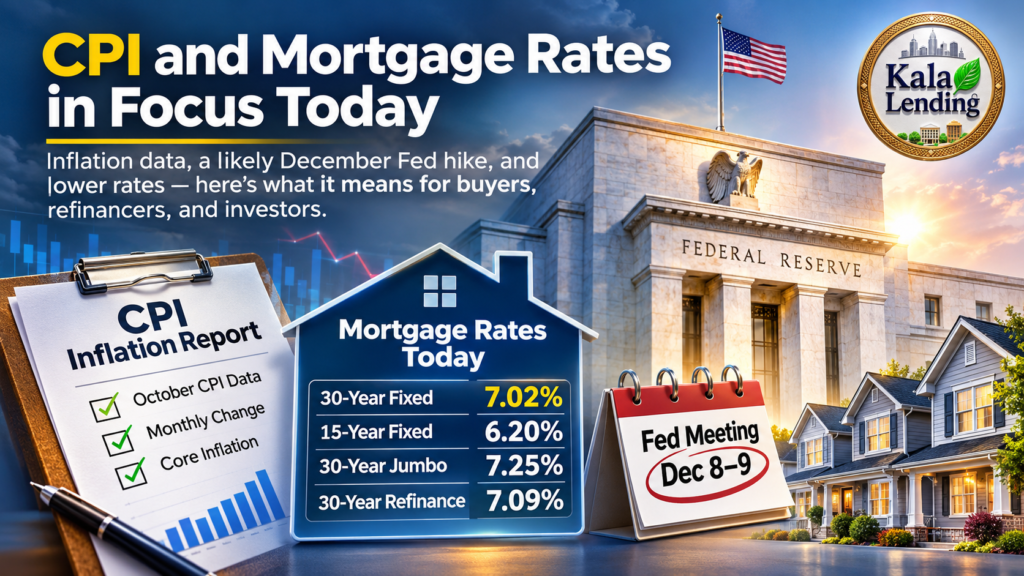
Rates fell again this week, according to Forbes Advisor, using Mortgage Research Center data:
- 30-year fixed: 7.02%, down 0.10 points from last week
- 15-year fixed: 6.20%
- 30-year jumbo: 7.25%
- 30-year refinance: about 7.09%
Freddie Mac’s weekly survey, the benchmark most people cite, showed the 30-year fixed at 7.18% on November 5. That was the third straight weekly decline, down from 7.24%. It is still nearly a full point above last year’s 6.22%. The numbers differ because Freddie Mac publishes a weekly average, while daily trackers reflect current lender quotes.
Why CPI and Mortgage Rates Move Together
Mortgage rates follow the 10-year Treasury yield more closely than they follow the Fed’s own rate. The 10-year was around 4.88% early today, according to CNBC. Hotter inflation pushes yields up, and mortgage rates usually follow.
Economists expect October consumer prices to rise about 0.3% for the month, with core prices up about 0.2%. That would be a cooler reading than September, when headline CPI jumped 0.6% and annual inflation hit 3.7%.
One caveat: the BLS will not publish a year-over-year figure for October, because the 2025 government shutdown left a gap in last year’s data. Traders will focus on the monthly numbers. A soft core reading could trim hike odds but is unlikely to remove them. A core reading of 0.3% or more would push markets toward a full-priced hike.
The Fed Is Still Leaning Toward a December Hike
The Fed held its benchmark rate at 3.75%–4.00% on October 28, after raising it in September. Since then:
- Last week’s jobs report showed 165,000 new jobs and unemployment edging lower, according to Mortgage Professional.
- CME FedWatch put the odds of a December hike near 85%.
- San Francisco Fed President Mary Daly has said more increases are likely, though the timing is still uncertain.
- The MBA and Oxford Economics both expect a December hike. The MBA also projects another in early 2027, with the 30-year rate staying above 7% well into next year.
Oxford Economics points to tariffs, higher energy prices, and heavy AI investment as the main forces keeping inflation above target. Core PCE inflation was 3.1% in September. The Fed does not set mortgage rates directly, but expectations for its next move feed straight into bond yields.
Housing Demand Is Still Weak Despite Lower Rates
Lower rates have not brought buyers back. MBA data for the week ending October 30 showed:
- Total applications down 1.2%.
- The Purchase Index down 2% for the week and 19% below a year earlier.
- The Refinance Index nearly flat and about 60% below a year ago.
- ARM share at 11.4% of applications, the highest since September 2025. The 5/1 ARM averaged 6.29%, against 7.30% for the 30-year fixed.
Goldman Sachs economists expect existing-home sales in 2027 to stay about 26% below 2019 levels. On the bright side, Cotality’s Selma Hepp notes that more inventory and price cuts could give winter buyers some negotiating room.
What CPI and Mortgage Rates Mean for Borrowers
Here is a rough illustration, which is our estimate and excludes taxes and insurance. On a $400,000 loan, a 7.02% rate means a principal-and-interest payment of about $2,667 a month. If rates rose a quarter point to 7.27%, that payment would climb by about $68 a month.
- Buyers: If today’s payment fits your budget, locking a rate is often safer than waiting on a Fed that is leaning toward a hike.
- Refinancers: A rate and term refinance only makes sense if your current rate is meaningfully higher than today’s. A cash-out refinance can tap equity, but run the numbers at today’s rates first.
- ARM shoppers: An adjustable rate lowers the starting payment, but it can reset higher. Understand the caps before you choose one.
How Investors Can Respond
Higher rates hit investors hardest, because the payment feeds straight into cash flow. DSCR loans qualify borrowers on rental income rather than personal income, and they work for both new purchases and delayed financing. Because a higher rate raises the payment, always test whether the rent still covers it.
For short-term projects, bridge loans and fix and flip loans let you finance now and refinance later if rates fall. Business owners can also review our real estate business loans. For more context, read our recent posts on what the Nov 6 selloff means for investors and investment strategy in a 7% rate market.
What to Watch Next
- Today: the CPI report at 8:30 a.m. ET.
- Wednesday, Nov. 11: Veterans Day, with bond markets closed.
- Thursday: Freddie Mac’s next weekly rate survey.
- Friday: wholesale (producer) inflation data.
- Dec. 8–9: the Fed meeting, followed by the next CPI report on Dec. 10.
For the earlier rate trend, see our posts on the third weekly drop to 7.18% and the one-month low in rates.
Bottom Line
CPI and mortgage rates are tied together today, and the numbers are sending mixed signals. Rates are at a one-month low, but a December Fed hike looks likely and demand is still soft. Compare real quotes for your situation instead of trying to time the market. Ready to see your options? Apply now or contact our team for a personalized quote.
Disclaimer: Rates shown are national averages from third-party sources and are not Kala Lending offers. Your rate depends on credit, loan type, down payment, and property. This article is for informational purposes only and is not financial advice. See our Disclaimer.